Nitin spent six months building a proposal for a new analytics platform. He aligned with his manager. Got buy-in from his director. Presented to the VP. The VP said it was impressive. Then nothing happened. The proposal sat in a shared drive gathering virtual dust for four months.
What Nitin didn’t know: the actual decision on technology investments was influenced by a principal architect named Venkat who had no direct reports and didn’t appear in any approval chain. Venkat had been with the company for eleven years. He had the CTO’s ear in a way no org chart revealed. Nobody approved technology investments that Venkat hadn’t quietly endorsed. Nitin had never spoken to Venkat.
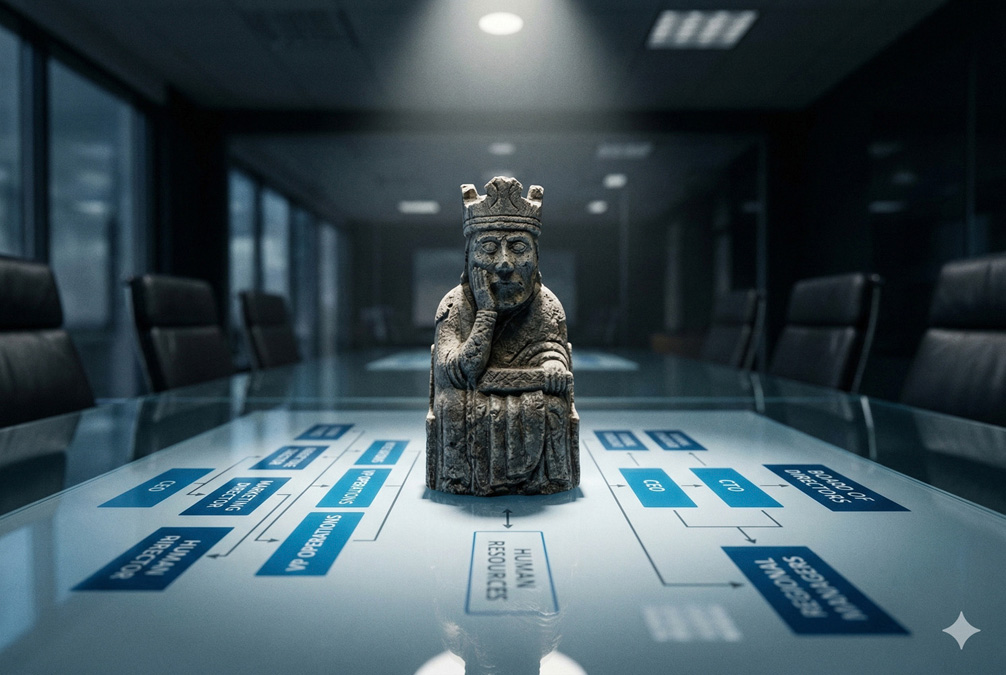
Every organisation has two structures. The org chart is the one on the website. It shows who reports to whom. The power map is the one nobody draws. It shows who actually influences what happens. The two documents overlap partially and diverge significantly.
You don’t need to be political to read the power map. You need to be observant. Watch who gets consulted before decisions are announced. That’s the map drawing itself.
Three signals that reveal the real power structure. First: who gets consulted before the meeting where the decision is supposedly made? Decisions in most organisations are pre-made. The meeting is ratification theatre. The people consulted before the meeting are the actual decision-makers. Second: who can say no and make it stick? Formal authority gives many people the power to say yes. Real power is the ability to block something without formal authority to do so. Third: whose departure would actually disrupt the organisation? Not whose title is highest. Whose absence would break the most workflows.
In Indian organisations, the power map has specific features. The executive assistant to the CEO often has more practical influence than several directors. The finance head who controls budget allocation wields power that outstrips their level. The “senior advisor” role that someone holds after being passed over for CEO is frequently the most powerful informal position in the building because they have the relationships without the accountability.
Nitin eventually met Venkat. Over chai. Not a formal meeting. Venkat asked good questions. Gave specific feedback. Endorsed the revised proposal to the CTO two weeks later. The platform was approved in the next budget cycle. Six months of formal alignment had produced nothing. One chai conversation with the right node on the power map moved the entire project.
In your organisation, who is the Venkat? And have you had chai with them?
Nitin aligned with everyone on the org chart. The decision sat with someone who wasn’t on it. Who’s on yours? careers.deliberx.com